

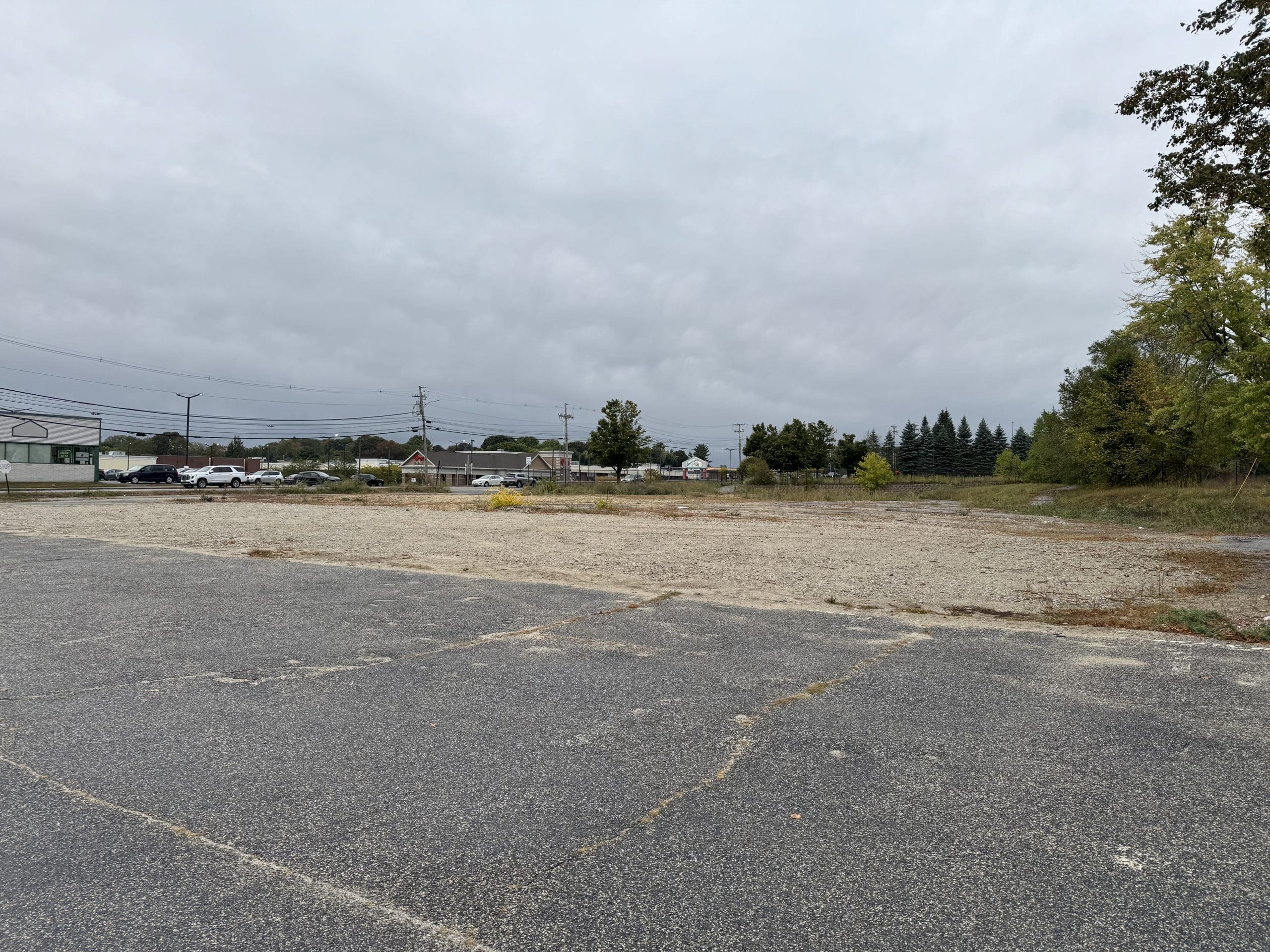
LEWISTON- Groundbreaking for a new senior housing project on the Martel School property has been pushed back again.
This is according to Lewiston Housing Authority Director Chris Kilmurry, who presented to the City Council during their meeting on September 16th. He said he was confident they’ll have shovels in the ground by the end of this year.
Kilmurry was also there to give an update on the Wedgewood project, part of the Choice Neighborhoods housing initiative happening in the Tree Streets neighborhood.
Kilmurry spoke briefly about the Martel School property project, which saw the demolition of the unused school building last year. According to the current agreement between the city and the LHA (a quasi-governmental entity), if the project does not go forward, Lewiston must reimburse the LHA for the demolition costs or give up the land to the LHA. Giving up the land would relinquish city control over what is eventually built on the property.
The Martel School project has been years in the works.
Built in 1925, in its later years the school building dealt with a series of issues (mold, in particular) that made its closure as a school necessary. Martel students moved over to Connors Elementary when it opened in 2019, leaving the building vacant.
After conducting a thorough review of the facilities, the School Committee determined that the building was not suitable for long-term future use by the district. The old part of the building had mold issues and was out of compliance with the Americans with Disabilities Act, and it would have been too expensive to make all of the required fixes.
The newer part of the building, which housed the cafeteria and several classrooms, was in better condition but it was determined to be not financially feasible to demolish the old part and keep the newer.
Although Lewiston Public Schools has had a space shortage for many years, the district wasn’t able to use the building and so the School Committee voted to give the property back to the city late in 2019. The ShareCenter, a supplies and furniture resource for regional educators, moved into the building around that time.
The City Council was tasked in early 2020 with deciding what to do with the property. Three options were presented. The first option was to sell the property to a buyer who had made an offer on it, although it would have meant the likely demolition of the school building. At that time, there was still considerable desire in the community to save the nearly 100-year-old building. One upside of this first option meant that whatever was built there would be added to the property tax rolls.
The second option was to accept a proposal from Lewiston Housing to rehab the building and convert it into senior housing. A question was brought up about whether the new housing would pay a property tax, and the LHA stated plans to put the property on the tax roll (nonprofits due not pay property taxes, according to state law).
The third option was to allow the ShareCenter to remain in the building permanently. Considering the facilities issues with the building, and the liability of continuing use of the building in any capacity, this option was not considered viable by the Council, which unanimously voted to allow the LHA to proceed with their proposed senior housing project.
The project has depended on large housing grants awarded by the state. The Covid-19 pandemic resulted in less funding available, and issues with high construction costs delayed the project further. It was eventually deemed that the project would be better served by demolishing the school building and using the land to build brand new facilities.
Work on the project has often stalled, with a groundbreaking being pushed back several times.
In early 2024, it was floated that construction could potentially begin by the end of that year. The project earned funding from the state before the start of spring, and the building was demolished before June. Later that year, the timeline for a groundbreaking was pushed back until the following spring.
During a March 2025 City Council update, Kilmurry announced that groundbreaking was scheduled for sometime during the summer. With summer coming to a close and no visible updates to the property, councilors asked the LHA to provide an update on the project, which happened at the recent meeting.
Just last month, the City Council voted to approve a TIF (tax increment financing) agreement for the project, which will see 75% of property taxes returned to the developer over the next 16 years for phase one of the project, and 17 years for phase two. This was done to help the developer secure enough financing to begin the project.
During public comment, Ward 4 resident Matthew Agren voiced frustration that the date for the project kept getting pushed back.
Housing of all types is greatly needed in Lewiston, and housing for seniors is no exception. Although the housing provided by the Martel School project won’t be exclusive to Lewiston residents (all Mainers can apply, if they meet the age and income requirements), locals are happy that more senior housing will be added to the area.
The Martel School was named after Dr. Louis J. Martel, a well-known Lewiston resident who played a role in the founding of St. Mary’s Medical Center (and many other local institutions) and served as an alderman and state representative in the 19th century.
According to a profile on mainememory.net, Martel was sometimes called the “Father of Naturalization” due to his efforts to promote naturalization among early French-Canadian immigrants in America.
An immigrant from Quebec who came to Lewiston in 1873 to practice medicine at the request of a local priest, Martel organized naturalization classes to help French-Canadian immigrants become American citizens and even provided financial support to many immigrants and their families. He became beloved by both English and French speaking residents partly for his kindness and generosity, but more so for working to bridge the divide that existed between Americans living in Lewiston and the growing number of French-Canadians emigrating there.
A historic brick building still standing at the corner of Bartlett and Walnut Streets was built and named for him in 1883.